Maize: a global crop with highly variable outcomes
Maize, a major global crop, perfectly illustrates the contrasts of 2025 across regions and production systems.
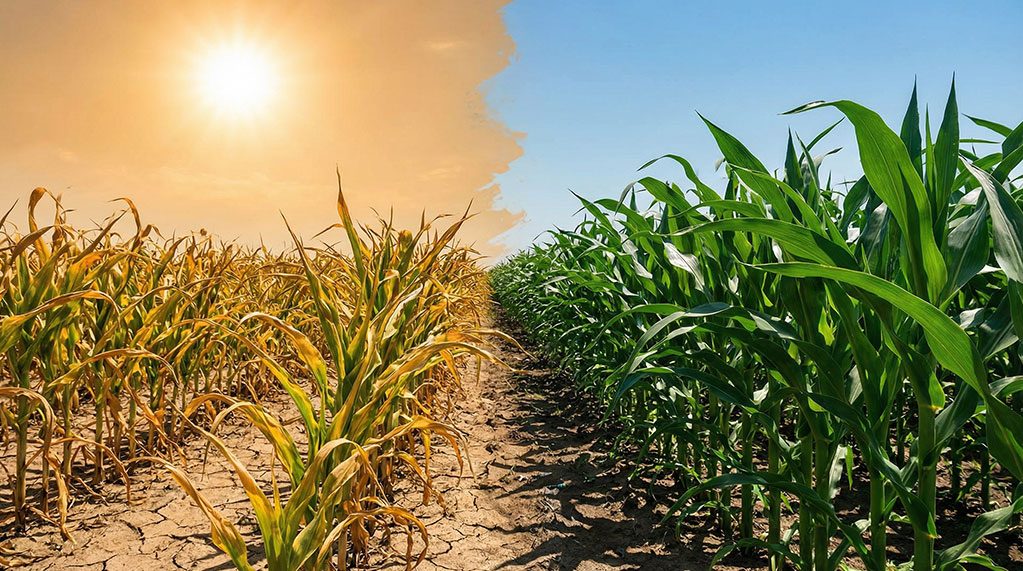
In Europe, spring 2025 will be remembered as exceptionally dry. Nearly 40% of the European Union territory was already under alert by spring. Germany recorded its driest March ever measured, while the United Kingdom experienced its hottest and driest spring since 1893. Summer then brought its own set of challenges: Western, Southern, and South-Eastern Europe experienced drier-than-average conditions throughout the entire season.
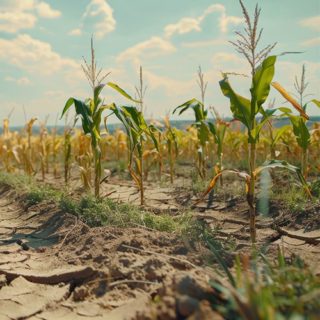
In France, maize paid the heaviest price, with yields ranging from 87.5 to 88.5 q/ha, representing a -8.2% decrease compared to 2024. Two heatwaves (June 19 to July 4 lasting 16 days, then August 8 to 18) occurred precisely during flowering and grain filling. Evapotranspiration reached 9 mm/day (+4 mm versus normal), while water deficits exceeded 150 mm in Western and Central regions. Rainfed maize was particularly affected (~77 q/ha), with losses of 20 to 30% in Poitou-Charentes, Pays de la Loire, Limousin, Burgundy, and the South-West. Irrigation requirements reached up to 268 mm, i.e. +50 mm versus the average.
In South-Eastern Europe, the Joint Research Centre confirms irreversible losses. Eastern Hungary, Southern Romania, and Bulgaria experienced repeated heatwaves combined with persistent water shortages, resulting in yields well below the five-year average. Germany, Poland, and Western Hungary performed better, benefiting from more favorable rainfall distribution.
In the United States, despite extreme climatic conditions, maize achieved a record yield of 186.0 bushels per acre, with total production reaching 16.8 billion bushels (+12% versus 2024). This remarkable performance highlights the effectiveness of intensive irrigation and well-adapted agricultural practices in overcoming climate challenges.
In Brazil, production increased by 23.5% to reach a record 141.6 million tonnes, despite La Niña conditions and irregular rainfall, confirming the strong adaptive capacity of the Brazilian agricultural sector.
Key takeaways: