Agro-ecological transitioning

2025 Climate Review: How Water Stress Episodes Are Reshaping the Global Map of Agricultural Yields

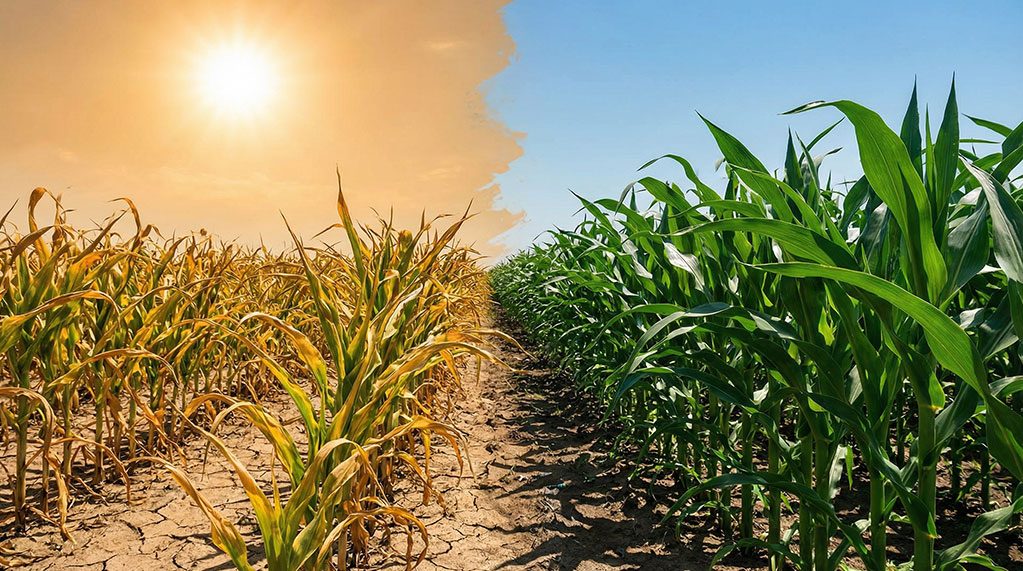
2025 will be remembered as a year of stark contrasts. While Europe was hit hard by the combined impact of heat and water deficits, the Americas recorded historic harvests. This sharp divide is not a climatic coincidence, but the signal of a new era for global agriculture. An in-depth look at an exceptional season in which water stress management emerged as the key driver of performance.

2025 Climate Review: How Water Stress Episodes Are Reshaping the Global Map of Agricultural Yields

The year 2025 ranks as the 2nd or 3rd warmest year ever recorded, according to the Copernicus Climate Change Service. With global temperatures reaching +1.18°C above the 20th-century average, it confirms a worrying trajectory that now affects agricultural regions across all continents.

Beyond temperature records, it is the repeated occurrence of intense heatwaves and water deficits during critical crop development stages that has profoundly shaped global agriculture. From Europe to North America, including Brazil, broad acre crops have faced particularly challenging conditions, with contrasting impacts depending on regional contexts and adaptive capacity.

FAO (Food and Agriculture Organization of the United Nations) figures are telling: nearly 2 billion people now live in regions where agricultural yields are declining.

For farmers, 2025 represents a very real economic reality, marked by significant yield losses in certain areas and increasing pressure on production systems.

Warmest year

2nd – 3rd

Warmest year

since 1900

Global anomaly

+1.18°C

Global anomaly

vs 20th-century average

People affected

~2 bn

People affected

declining yields

World background

Climate overview and crop-specific impacts

At a global scale: a historically warm year

The year 2025 ranks among the warmest years since the beginning of instrumental records. This persistent heat was accompanied by a surge in major climate events: record-breaking wildfires in Europe, climate extreme indices 58% above average in the United States, and irregular rainfall patterns across several continents.

What particularly defines 2025 is not so much the absolute intensity of these events, but their frequency and timing. Heatwaves and water deficits occurred precisely during critical crop development stages, significantly amplifying their impact on final yields.

Maize: a global crop with highly variable outcomes

Maize, a major global crop, perfectly illustrates the contrasts of 2025 across regions and production systems.

In Europe, spring 2025 will be remembered as exceptionally dry. Nearly 40% of the European Union territory was already under alert by spring. Germany recorded its driest March ever measured, while the United Kingdom experienced its hottest and driest spring since 1893. Summer then brought its own set of challenges: Western, Southern, and South-Eastern Europe experienced drier-than-average conditions throughout the entire season.

In France, maize paid the heaviest price, with yields ranging from 87.5 to 88.5 q/ha, representing a -8.2% decrease compared to 2024. Two heatwaves (June 19 to July 4 lasting 16 days, then August 8 to 18) occurred precisely during flowering and grain filling. Evapotranspiration reached 9 mm/day (+4 mm versus normal), while water deficits exceeded 150 mm in Western and Central regions. Rainfed maize was particularly affected (~77 q/ha), with losses of 20 to 30% in Poitou-Charentes, Pays de la Loire, Limousin, Burgundy, and the South-West. Irrigation requirements reached up to 268 mm, i.e. +50 mm versus the average.

In South-Eastern Europe, the Joint Research Centre confirms irreversible losses. Eastern Hungary, Southern Romania, and Bulgaria experienced repeated heatwaves combined with persistent water shortages, resulting in yields well below the five-year average. Germany, Poland, and Western Hungary performed better, benefiting from more favorable rainfall distribution.

In the United States, despite extreme climatic conditions, maize achieved a record yield of 186.0 bushels per acre, with total production reaching 16.8 billion bushels (+12% versus 2024). This remarkable performance highlights the effectiveness of intensive irrigation and well-adapted agricultural practices in overcoming climate challenges.

In Brazil, production increased by 23.5% to reach a record 141.6 million tonnes, despite La Niña conditions and irregular rainfall, confirming the strong adaptive capacity of the Brazilian agricultural sector.

Key takeaways:

Soybean: vulnerability during the pod-filling stage

Soybean showed particular sensitivity to water deficit episodes during its critical pod-filling stage.

In France, with yields of 23.7 q/ha (-9.2% vs 2024) and total production of 356,000 tonnes (-0.5%), soybean was heavily impacted by summer water stress during pod formation.

In the United States, soybean achieved a record yield of 53.0 bushels per acre, although total production declined slightly by 3% to 4.25 billion bushels, reflecting a modest reduction in planted area.

In Brazil, soybean set a historic record with 166.0 million tonnes (+14.5%), consolidating the country’s position as the world’s leading producer and demonstrating remarkable resilience under variable conditions.

Key takeaways:
Region 2025 trend Key figures Context & impacts
France 📉 Yield decline -9.2% yield (23.7 q/ha)
356 kt production (-0.5%)
  • Severe summer water stress
  • Critical impact during pod filling
United States 📈 Record yield 53.0 bushels/acre (record)
Production -3% (area)
  • Historic yield despite reduced planted area
  • Strong technical performance
Brazil 📈 Historic record +14.5% production
166.0 Mt
  • Consolidation as the world’s leading producer
  • Remarkable resilience under variable conditions

Sunflower and cereals: timing makes the difference

Sunflower

Sunflower showed relatively better resilience. In France, yields reached 21.7 q/ha (+10.7% vs 2024), thanks to better natural tolerance and a crop cycle that avoided the most critical periods. However, in South-Eastern Europe, sunflower was heavily impacted in areas affected by repeated heatwaves.

Cereals

Cereals benefited from a favorable calendar. Their early growth cycle took place before the most intense summer events. In France, soft wheat reached 74 q/ha (+18% vs 2024) and barley increased by 12%. At the European level, wheat production is expected to reach 140.4 million tonnes, up sharply from 125.5 million tonnes the previous year, marking a return to normal yield levels after 2024.

Key takeaways:
Crop & Area 2025 trend Key figures Context & drivers
🌻 Sunflower
France
📈 Increase +10.7% yield
21.7 q/ha
  • Better natural tolerance
  • Shifted crop cycle avoiding critical periods
🌻 Sunflower
South-Eastern Europe
📉 Decline Heavily impacted
  • Area hit by repeated heatwaves
  • Severe water stress
🌾 Cereals
France
📈 Strong increase Soft wheat: 74 q/ha (+18%)
Barley: +12%
  • Favorable timing
  • Early cycle completed before summer heatwaves
🌾 Wheat
Europe (overall)
📈 Production increase 140.4 Mt (vs 125.5 Mt)
Return to normal levels
  • Rebound after a challenging 2024
  • Favorable spring conditions
Corn water stress

Understanding water stress and its impact

A complex phenomenon with critical timing

Water stress occurs when a plant’s water requirements exceed the available supply, exacerbated by atmospheric evaporation that is higher than root water uptake. In 2025, evapotranspiration reached record levels: 9 mm/day in France (+4 mm versus normal), combined with rainfall deficits exceeding 150 mm in certain areas.

What made 2025 particularly challenging was not so much the absolute intensity of events, but their timing. Each crop has phases of maximum sensitivity:

  • Maize: flowering and grain filling (July–August) – stress at these stages leads to poor ear filling and limits dry matter accumulation
  • Soybean: flowering and pod formation – water shortage results in flower abortion
  • Sunflower: flowering and achene filling – its deep root system nevertheless provides better resilience
  • Cereals: stem elongation and grain filling (May–June) – their early cycle allowed them to avoid the most severe summer conditions

The impacts go beyond yield: shortened grain-filling periods, reduced photosynthetic efficiency, and in some cases quality losses (lower protein levels in cereals).

A long-term global trend

Climate change and agriculture

The year 2025 should not be seen as an isolated anomaly, but rather as an illustration of an underlying trend. A study published in the Proceedings of the National Academy of Sciences shows that global wheat yields would be 10% higher without the impact of warming over the past 50 years (Lobell & Di Tommaso, 2025).

The increasing frequency of adverse climate events is no longer a projection, but a current reality affecting all continents. What Météo France describes as a “typical summer pattern of the recent climate” is becoming increasingly common on a global scale.

Uneven adaptive capacity

The year 2025 highlights significant disparities in adaptive capacity. The United States and Brazil have shown that well-equipped agricultural systems can maintain, or even improve, performance despite challenging conditions. By contrast, less equipped regions have suffered more severe impacts, with local yield losses of 20 to 30%.

This reality raises a major challenge:

How can all production systems be enabled to adapt to increasing variability and more frequent stress episodes?

Elicit Plant logo
Elicit Plant

a technological response to a global challenge

Our approach: strengthening natural resilience

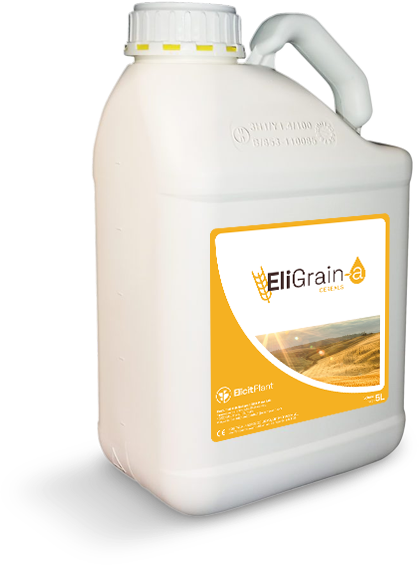
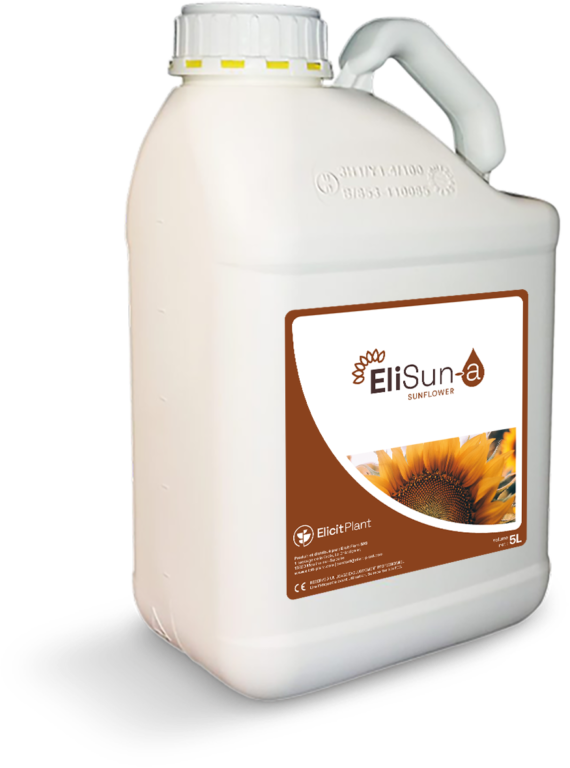
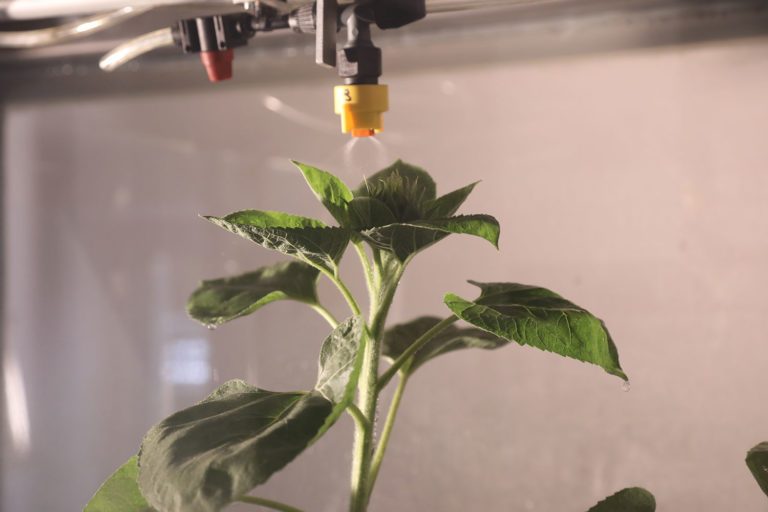
In response to this new global climate reality, Elicit Plant has developed a technology that stimulates plants’ natural protective mechanisms, enabling them to maintain metabolic activity and make better use of available water during challenging periods.

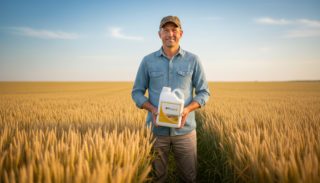
Wheat farmer with EliGrain-a
A clear positioning

We are effective against short, repeated water stress episodes such as those observed in 2025: heatwaves lasting from a few days to a few weeks, periods when water becomes limiting but not entirely absent, and stress occurring during critical growth stages.
We do not claim to provide a solution in cases of extreme and prolonged water deficit. When there is no water left, nothing grows.


Our added value lies in these intermediate situations, which are becoming increasingly common worldwide, where plants are exposed to repeated stress events that negatively impact yield.
Tractor applying Elicit Plan'ts products

Concrete benefits

Our technology, applicable to maize, cereals, sunflower and soybean, delivers:

  • Yield preservation during stress periods by protecting the photosynthetic system at critical stages
  • Optimized use of available water in both irrigated and rainfed systems
  • Reduced year-to-year variability to help secure farm income
  • Long-term adaptation to the increasing recurrence of stress episodes

Facing recurring water stress?

Speak with our experts

Get tailored advice on how our solutions can help your crops perform better under water stress and improve profitability per hectare.

Elicit Plant Expert

Facing recurring water stress?

Speak with our experts

Get tailored advice on how our solutions can help your crops perform better under water stress and improve profitability per hectare.

💬 Get expert advice
Elicit Plant Expert

Conclusion

The year 2025 illustrates the new agricultural normal: repeated heat episodes, water deficits during critical growth stages, and increased variability. The figures speak for themselves: -8 to -9% in France, -20 to -30% in certain European regions, but record performances in the United States and Brazil.

What defines 2025 is less the severity of extremes than their repetition: heatwaves occurring at the wrong time, deficits settling in during flowering and grain filling. It is precisely in these situations that technological innovation proves its full value.

At Elicit Plant, we are convinced that the future lies in a combination of proven practices and targeted innovations. Our solution does not replace water, but provides a concrete response to short, repeated stress episodes that are becoming increasingly frequent.

Because maintaining yields under these new conditions means contributing to global food security and securing the future of farming operations.

Sources

Global and European climate

  • Copernicus Climate Change Service – Global Climate Highlights 2025 – climate.copernicus.eu
  • Météo France – Climate review 2025 – meteofrance.fr
  • NOAA – National Climate Reports 2025 – ncei.noaa.gov
  • Joint Research Centre (JRC) – European Commission – Europe drought reports 2025

Agriculture – France

  • ARVALIS – Technical reports on broad acre crops 2025 – arvalis.fr
  • Agreste (French Ministry of Agriculture) – Harvest reports 2025
  • COCERAL – European cereal production forecasts 2025

Agriculture – United States

  • USDA – Crop Production Reports, November 2025 – nass.usda.gov

Agriculture – Brazil

Scientific studies

  • Lobell, D.B. & Di Tommaso, S. (2025) – “A half-century of climate change in major agricultural regions” – PNAS, Vol. 122, No. 20
  • FAO – The State of Food and Agriculture 2025

Discover our solutions dedicated to tackling water stress