Late Summer 2026: Water Stress Risks Already Emerging Across Major Agricultural Regions
Recent seasonal outlooks point to an elevated risk of heat and water stress across several of the world’s key agricultural production areas.
In Europe, projections from the Copernicus Climate Change Service (ECMWF)¹¹ indicate a high probability of above-average temperatures across much of Western and Central Europe between June and August 2026. In parts of Central, Eastern, and Southern Europe, the likelihood locally exceeds 60% to 70%.
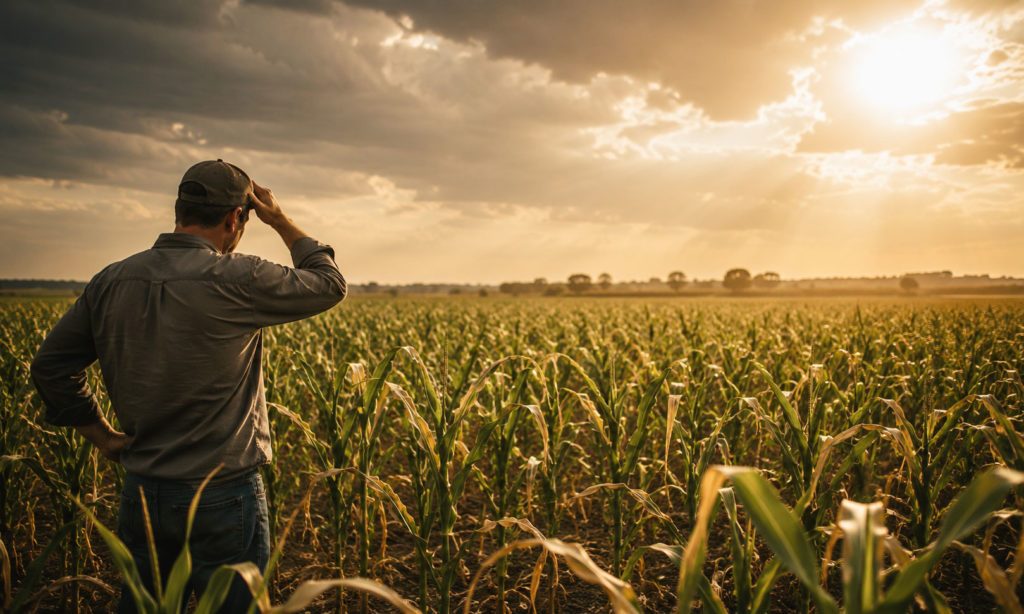
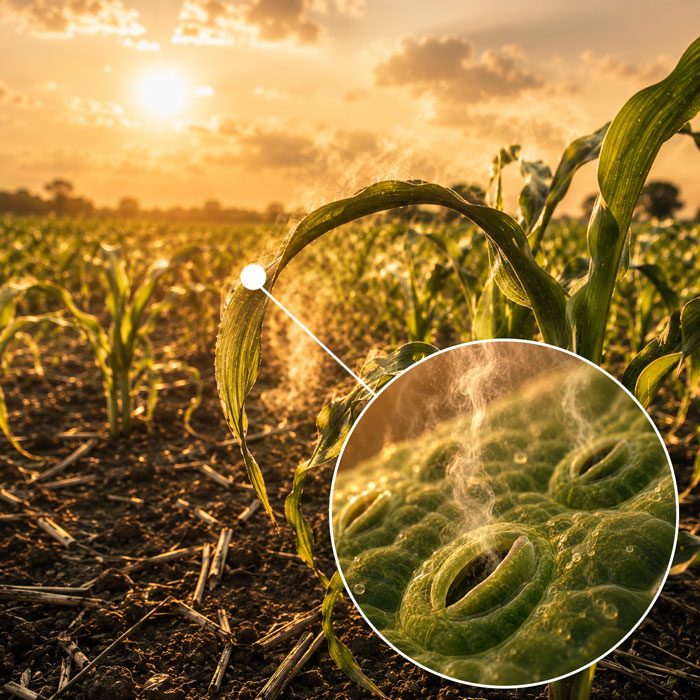
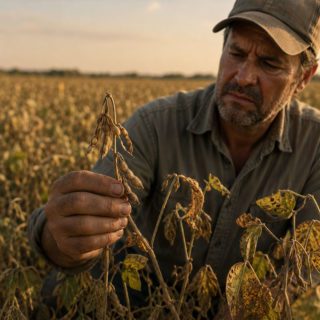
These conditions could intensify water deficits during critical growth stages for maize, sunflower, and soybean crops, particularly during flowering and grain filling. Several European weather analyses have also highlighted the potential development of a “heat dome”, a weather pattern capable of trapping hot, dry air masses over agricultural regions for extended periods.
In the United States, NOAA forecasts¹² also point to above-normal temperatures across portions of the Midwest and Great Plains during the summer of 2026, with drought risks that could affect maize and soybean crops during key developmental stages.
These outlooks should not be interpreted as precise local weather forecasts. However, they reinforce a trend that is becoming increasingly clear: periods of excessive heat and water stress are becoming more likely across the world’s major crop-producing regions, precisely when crops are at their most physiologically vulnerable.